Lawyers Are Getting Caught Filing Fake AI Citations. And It’s Getting Serious
It started as a one-off mistake. It’s not anymore.

Not long ago, a story went around about a lawyer who submitted a brief with cases that didn’t exist. Turns out, an AI tool had confidently “invented” them.
People laughed. It felt like one of those early AI hiccups. A lesson learned.
But now it’s happening again. And again.
Courts in different jurisdictions are seeing fake AI-generated citations show up in filings. Not sloppy typos. Not outdated references. Entirely fabricated case law that looks real enough to pass a quick read.
And the tone from judges has shifted. This is no longer a curiosity. It’s becoming a professional issue.
What’s actually going wrong here
The uncomfortable truth is this: most AI tools lawyers use today are not built to verify facts. They’re built to generate answers. So when you ask for a case, the system doesn’t “search” like a legal database. It predicts what a valid answer should look like. Names, citations, reasoning, all stitched together in a way that feels legitimate. Most of the time, it lands somewhere close to reality. Sometimes, it doesn’t. That gap is what people refer to as AI hallucination in legal research. And in 2026, it’s not theoretical anymore. It’s showing up in real courtrooms, attached to real filings, with real consequences.
Why even careful lawyers are falling into this
It’s easy to assume this only happens when someone is careless or inexperienced. That’s not what’s playing out. Even experienced lawyers are getting caught. And the reason is simple. The output looks right. It reads like proper legal writing. The structure is clean. The tone is confident. The citations look familiar. If you’re working against a deadline, it’s very easy to accept that output, maybe skim it once, and move on. Nothing jumps out as obviously wrong. Until someone actually tries to find the case.
When a fake citation reaches the court
This is where things escalate quickly.
If a judge or opposing counsel can’t verify a citation, it raises immediate questions:
Was the research done properly
Has the lawyer relied on an unverified source
Can the rest of the argument be trusted
In some cases, courts have issued warnings. In others, penalties have followed. Beyond that, there’s the quieter cost. Credibility. In legal practice, trust is cumulative. And it doesn’t take much to damage it.
The real problem isn’t AI. It’s how we’re using it.
AI can be incredibly useful in legal work. It speeds things up. Helps structure arguments. Surfaces ideas you might not have considered. But it’s being used, in many cases, as a shortcut to authority. That’s the mistake. Generated text is not the same as verified research. It can sound identical on the surface, but underneath, one is grounded in real sources and the other might not be. That difference matters a lot in law.
So how do you make sure you’re not next?
There’s no complicated framework here. It comes down to one discipline that can’t be skipped
If you didn’t verify the citation yourself, don’t rely on it.
That means:
Looking up the case in a trusted legal database
Confirming the citation actually exists
Reading enough of the judgment to know it supports your argument
Not assuming the AI “must be right”
It sounds basic. But AI makes it easy to forget this step because the output feels finished. It isn’t.
A more practical way to use AI in legal work
Avoiding AI altogether isn’t realistic. And honestly, it’s not necessary. The better approach is to be intentional about where it fits. Use it to:
Draft initial arguments
Break down complex judgments
Explore different legal angles
But draw a clear line. When it comes to citations and authorities, switch back to verified sources. Think of AI as a drafting partner, not a research database.
Where things are heading from here
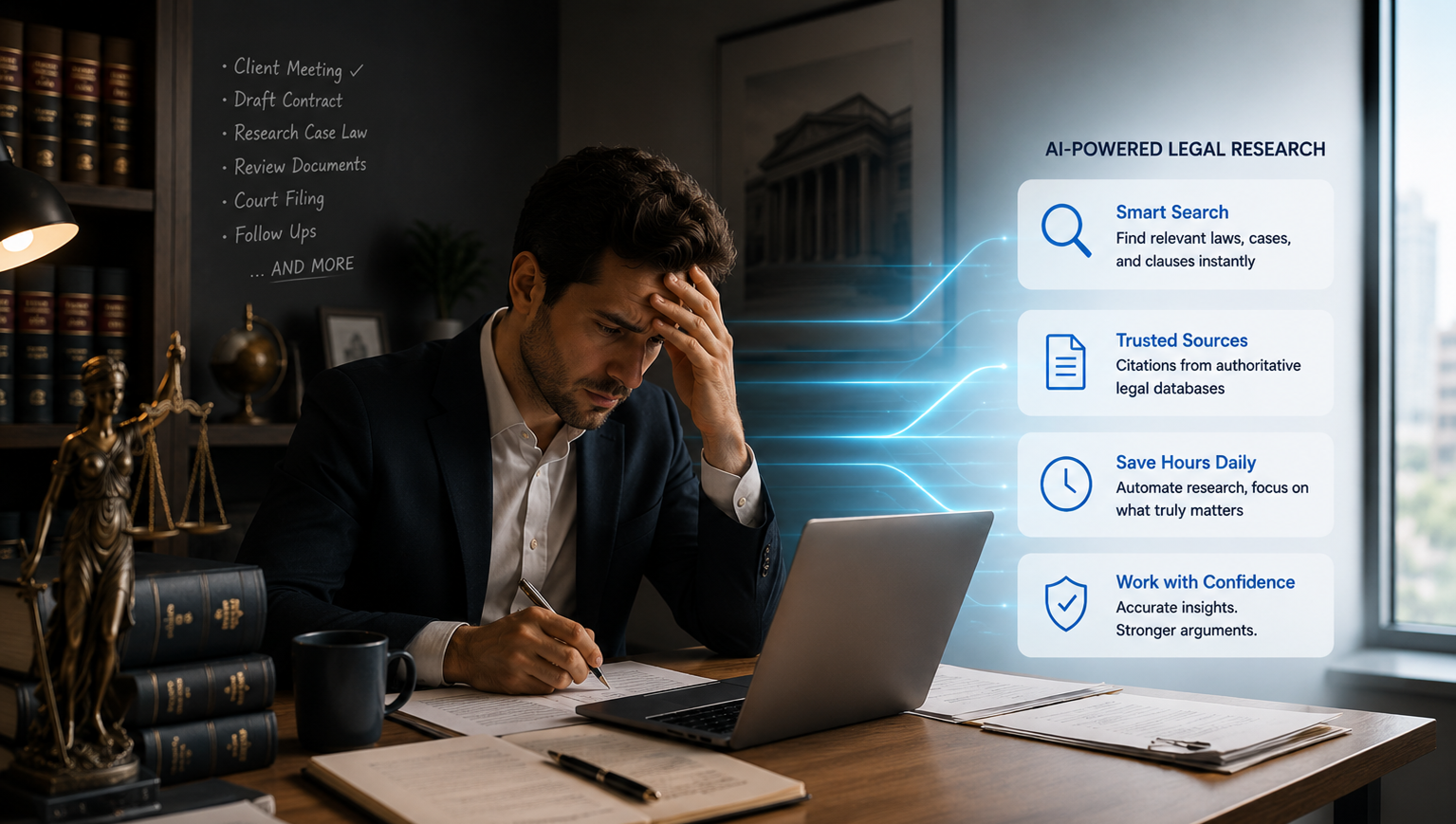
This shift is already influencing how legal tools are evolving. There’s a growing expectation that AI-assisted research should come with traceable, verifiable sources, not just polished answers. Because that’s what lawyers actually need. Speed helps, but reliability is non-negotiable. Tools that can connect AI-generated insights directly to real judgments, statutes, and databases are starting to stand out for this reason.
Final thought
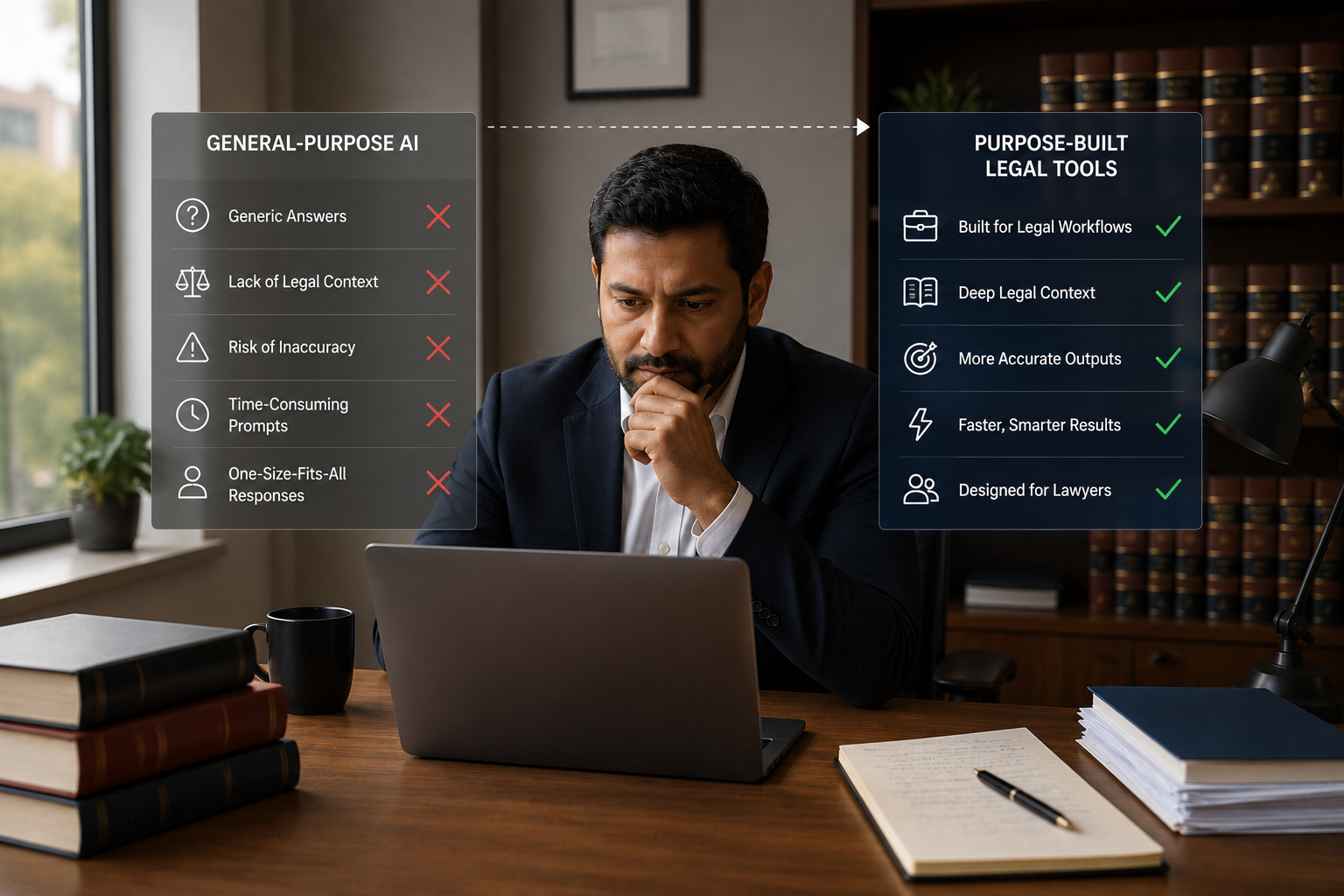
AI is going to stay in the legal workflow. That part is settled. What hasn’t changed is the standard you’re held to. If you cite something in court, it needs to exist. You need to be able to stand behind it. And you need to know where it came from. That’s where most general AI tools still fall short. They generate answers, but they don’t always show their work. The safer path is moving toward systems that combine AI with verified legal sources from the start.
Platforms like ovviously are being built around this idea, focusing on grounding responses in real, traceable data rather than just producing confident-sounding text. Because in the end, in legal practice, sounding right isn’t enough. You have to be right.